Plumbing management software sets the stage for this enthralling narrative, offering readers a glimpse into a story that is rich in detail with casual formal language style and brimming with originality from the outset. This comprehensive exploration delves into the multifaceted world of digital tools designed to streamline operations, enhance customer service, and drive profitability for plumbing businesses.
From understanding the core functionalities that underpin efficient plumbing business administration to appreciating the transformative impact of these digital solutions on customer interactions, this guide provides a thorough overview. We will dissect the financial advantages and return on investment, explore integration possibilities, and look towards the future evolution of technology in this vital sector. Furthermore, the critical aspects of data security, practical implementation, software selection, user experience, and the power of advanced reporting will be illuminated, offering a complete picture of how plumbing management software revolutionizes the industry.
Unveiling the Fundamental Capabilities of Effective Plumbing Business Administration Tools
In today’s competitive landscape, plumbing businesses need more than just skilled technicians; they require robust administrative tools to streamline operations, enhance customer satisfaction, and drive profitability. Effective plumbing management software acts as the central nervous system for these businesses, automating routine tasks, providing critical insights, and empowering teams to perform at their best. These tools are designed to address the unique challenges faced by plumbing professionals, from managing complex service calls to maintaining client relationships and ensuring financial health.
The core functionalities are meticulously crafted to transform chaotic workflows into organized, efficient processes.The fundamental capabilities of effective plumbing business administration tools revolve around optimizing every facet of the service lifecycle. This includes everything from initial customer contact and appointment setting to job completion, invoicing, and follow-up. By centralizing information and automating key processes, these systems eliminate manual errors, reduce administrative overhead, and free up valuable time for technicians and office staff alike.
The ultimate goal is to create a seamless experience for both the business and its customers, fostering loyalty and repeat business. This requires a suite of integrated features that work in harmony to support the day-to-day demands of a dynamic plumbing operation.
Core Functionalities for Plumbing Operations
The backbone of any successful plumbing business administration tool lies in its core functionalities, which are meticulously designed to manage the entire service lifecycle. These features are not merely conveniences; they are essential for maintaining operational efficiency, ensuring customer satisfaction, and driving financial performance. Without these fundamental capabilities, plumbing businesses would struggle to keep pace with demand, manage resources effectively, or maintain a competitive edge in the market.
The integration and seamless operation of these features are paramount.At its heart, effective plumbing management software must excel in several key areas:
- Customer Relationship Management (CRM): This encompasses managing customer contact information, service history, preferences, and any specific notes related to their properties. A robust CRM allows for personalized communication, proactive service reminders, and a deeper understanding of client needs, fostering stronger relationships and increasing customer retention. It’s the foundation for building trust and loyalty.
- Scheduling and Appointment Management: This feature allows for the efficient booking of service calls, assignment of technicians based on skill sets and availability, and optimization of routes to minimize travel time. It ensures that appointments are met on time, reducing customer wait times and maximizing the number of jobs that can be completed daily. Effective scheduling directly impacts technician productivity and customer satisfaction.
- Dispatching: This functionality enables real-time assignment and tracking of field technicians. When a new job comes in, dispatchers can quickly find the most suitable technician, send them the job details, and monitor their progress. This immediate responsiveness is crucial for emergency calls and for efficiently managing unexpected changes in the schedule.
- Job Management and Tracking: This involves creating detailed work orders, documenting services performed, parts used, and time spent on each job. Real-time updates from the field ensure that office staff have an accurate view of job status, enabling better communication with customers and facilitating prompt invoicing.
- Invoicing and Payment Processing: Streamlining the billing process is critical for cash flow. This feature allows for the generation of accurate invoices based on completed work orders, the tracking of payments, and the management of outstanding balances. Integration with payment gateways further simplifies transactions.
- Inventory Management: For businesses that stock parts, managing inventory levels is vital to avoid stockouts or overstocking. This functionality tracks parts usage, reorder points, and costs, ensuring that technicians have the necessary components readily available.
- Reporting and Analytics: Access to key performance indicators (KPIs) such as job completion rates, technician productivity, revenue generated, and customer satisfaction scores is essential for informed decision-making. Comprehensive reports help identify areas for improvement and strategic growth.
Scheduling, Dispatching, and Customer Relationship Management Integration
The true power of plumbing management software is unlocked when its core features, particularly scheduling, dispatching, and customer relationship management (CRM), are seamlessly integrated. This interconnectedness transforms individual functions into a cohesive system that drives significant operational efficiency and elevates the customer experience. When these elements work in concert, they create a dynamic and responsive workflow that benefits every aspect of the business.Scheduling and dispatching are intrinsically linked.
Effective scheduling lays the groundwork by identifying available time slots and technician expertise. Dispatching then takes this information and dynamically assigns the right technician to the right job at the right time, often in response to real-time events. For instance, a technician completing a job ahead of schedule might be immediately dispatched to the next appointment, preventing downtime and maximizing billable hours.
This fluidity is crucial for managing the unpredictable nature of plumbing emergencies.Customer relationship management provides the vital context for both scheduling and dispatching. By having immediate access to a customer’s service history, preferences (e.g., preferred appointment times, specific equipment in their home), and any previous issues, schedulers and dispatchers can make more informed decisions. A customer who has historically experienced recurring issues with a specific piece of equipment might be assigned a technician with specialized knowledge in that area.
Furthermore, CRM data allows for personalized communication, such as sending appointment reminders or follow-up service suggestions, which significantly enhances customer satisfaction. This proactive approach, informed by detailed customer data, moves the business from reactive problem-solving to proactive service.Consider a scenario where a customer calls with a leaking pipe. The CRM system immediately pulls up their contact details and service history.
The scheduler sees an opening in the afternoon and checks the availability of technicians skilled in pipe repair. The dispatch system then assigns the closest available technician, providing them with the customer’s address, the nature of the problem, and any relevant historical notes from their CRM profile. The technician, en route, can access this information via their mobile device, preparing them for the specific task.
Upon arrival, they can update the job status in real-time, informing the office and the customer of their progress. This level of integration minimizes miscommunication, reduces administrative burden, and ensures a swift, efficient, and satisfactory resolution for the customer.
Mobile Accessibility for Field Technicians
The advent of mobile accessibility has revolutionized the way plumbing businesses operate, particularly for field technicians. Providing technicians with the ability to access and update job information directly from their mobile devices is no longer a luxury but a fundamental necessity for modern plumbing management. This capability bridges the gap between the office and the field, enabling real-time data synchronization that has a profound impact on operational efficiency, accuracy, and customer service.Mobile accessibility empowers technicians with the tools they need to perform their jobs more effectively and efficiently.
Instead of relying on paper work orders and manual reporting, technicians can access all relevant job details – customer information, service history, location, and specific instructions – directly on their smartphones or tablets. This immediate access ensures they arrive at a job site fully prepared. Crucially, it also allows them to update job status, log services performed, record parts used, and capture customer signatures in real-time.The impact of this real-time data synchronization is multifaceted.
Firstly, it drastically reduces the administrative burden on office staff. Information that would typically be manually entered back at the office is now captured instantly by the technician. This minimizes the chances of data entry errors, lost paperwork, and delays in invoicing. Secondly, it provides management with an up-to-the-minute view of operations. They can see where technicians are, the status of ongoing jobs, and identify any potential bottlenecks or issues as they arise.
This allows for proactive adjustments to scheduling and dispatching, ensuring resources are optimally allocated.For the customer, mobile accessibility translates into a more professional and transparent service experience. Technicians can provide instant updates on arrival times, job progress, and complete work orders on the spot. This immediacy fosters trust and confidence. For example, a technician can take photos of the completed work and have the customer sign off on the service electronically, generating an immediate digital invoice that can be emailed to the customer before the technician even leaves the property.
This streamlined process not only enhances customer satisfaction but also accelerates payment cycles, improving the business’s cash flow.
Conceptual Framework of Interconnected Core Features
The effectiveness of plumbing management software is derived from the synergistic interplay of its core features, forming a robust conceptual framework that supports the entire business operation. This framework illustrates how individual components are not isolated entities but rather interconnected nodes within a dynamic system, each contributing to the overall efficiency and success of the plumbing business.Imagine a central hub representing the core administrative system.
From this hub, several key conduits extend outwards, connecting to different operational areas:
- Customer Management (CRM) as the Foundation: This is the initial point of contact and the repository of all customer-related data. It informs all subsequent actions. When a customer calls, their information, service history, and any special notes are accessed here.
- Scheduling and Dispatching as the Orchestrators: These features draw data from the CRM to book appointments and assign technicians. Scheduling determines
-when* and
-who* is available, while dispatching acts on this information to assign the
-specific* job to the
-optimal* technician, considering location, skills, and real-time availability. - Mobile Field Operations as the Real-Time Link: This is where the physical work happens. Technicians, armed with mobile devices, access job details assigned by dispatch and feed critical data back into the system in real-time. This includes job status updates, parts used, time logged, and service completion confirmations.
- Job Management and Invoicing as the Outcome: This module receives the real-time data from the field. It consolidates all information related to a specific job, allowing for the accurate generation of invoices. The seamless flow of information from the technician to invoicing ensures prompt billing and reduces administrative lag.
- Inventory Management as the Support System: This feature is linked to job management, ensuring that parts used in the field are accurately recorded and that inventory levels are maintained. It informs procurement and prevents stockouts that could delay jobs.
- Reporting and Analytics as the Intelligence Engine: This component draws data from all other modules to provide insights into business performance. It helps identify trends, measure efficiency, and make informed strategic decisions.
This framework can be visualized as a continuous loop. A customer interaction through CRM initiates a service request, which is then scheduled and dispatched. The technician executes the job, updating it via mobile, which then feeds into job management and invoicing. The data generated from all these processes feeds back into CRM for future reference and into reporting for strategic analysis.
The true power of integrated plumbing management software lies in its ability to create a unified, data-driven ecosystem where every action and every piece of information flows seamlessly, optimizing every step of the service delivery process.
Illuminating the transformative impact of digital solutions on customer service within the plumbing sector.

The plumbing industry, traditionally reliant on direct person-to-person interaction, is undergoing a significant digital metamorphosis. This shift is not merely about adopting new tools; it’s about fundamentally reimagining how plumbing businesses engage with, serve, and retain their clientele. Modern plumbing management software acts as the central nervous system for this transformation, orchestrating a more efficient, transparent, and ultimately more satisfying customer experience.
By leveraging technology, plumbing businesses can move beyond reactive problem-solving to proactive relationship building, ensuring clients feel valued and well-cared for at every touchpoint.The core of this transformation lies in the software’s ability to streamline communication and enhance service delivery through intelligent automation and data-driven insights. Gone are the days of missed calls, lost notes, and uncertain appointment times. Digital solutions empower plumbing professionals to manage every aspect of the customer journey with unprecedented precision and responsiveness.
This leads to a palpable increase in customer satisfaction, fostering loyalty and positive word-of-mouth referrals, which are invaluable in a competitive market.
Enhanced Client Communication and Service Delivery Through Technology
Digital solutions revolutionize client communication by providing multiple, convenient channels for interaction and ensuring information is always accessible and up-to-date. This includes instant messaging capabilities, email notifications, and customer portals where clients can track job progress, view service history, and access important documents. Service delivery is equally transformed. Automated scheduling and dispatching systems ensure technicians are assigned the right jobs based on location, skill set, and availability, minimizing travel time and maximizing on-site efficiency.
Furthermore, mobile apps for technicians provide them with real-time job details, customer information, and diagnostic tools, enabling them to provide faster, more accurate service.
Remember to click hr management systems for small business to understand more comprehensive aspects of the hr management systems for small business topic.
Automated Appointment Reminders and Digital Invoicing
Automated appointment reminders are a cornerstone of improved customer satisfaction. These systems send out timely notifications via SMS or email to clients, confirming their scheduled service. This proactive approach significantly reduces no-shows, saving businesses valuable time and resources. For the customer, it provides peace of mind, ensuring they don’t forget their appointment and can make necessary arrangements.Digital invoicing offers a similar boost to customer satisfaction.
Instead of waiting for a paper invoice to be mailed or manually prepared, clients receive clear, itemized digital invoices promptly after service completion. This transparency allows them to review charges immediately and facilitates quicker payment processing. Many systems integrate with online payment gateways, offering clients the convenience of paying via credit card or other digital methods, further streamlining the post-service experience.
The convenience of automated reminders and digital invoicing directly translates to a smoother, more professional customer experience, fostering trust and reducing administrative friction.
Comparison of Traditional vs. Modern Customer Interaction Methods
Traditional customer interaction in the plumbing sector often involved phone calls for scheduling, manual note-taking for job details, and paper-based invoicing. This method was prone to human error, miscommunication, and delays. For instance, a customer might leave a voicemail that gets overlooked, or a technician might misread a handwritten note about a specific issue. Invoicing could take days or even weeks to process and deliver, leading to potential disputes and delayed payments.Modern plumbing software, conversely, offers a fully integrated and digitized approach.
Scheduling is done through online booking or direct input into the system, with automated confirmations and reminders. Job details are captured digitally, accessible to both the office and the technician in real-time. Invoices are generated instantly upon job completion, often with options for immediate digital payment. This transition moves the customer interaction from a potentially fragmented and error-prone process to a seamless, transparent, and efficient digital workflow.
| Traditional Method | Modern Software Method |
|---|---|
| Phone calls for scheduling, prone to missed calls and voicemails. | Online booking, automated confirmations, and SMS/email reminders. |
| Manual note-taking by office staff and technicians, risk of errors. | Digital job logging with real-time updates accessible to all relevant parties. |
| Paper invoices, mailed or hand-delivered, leading to delays. | Instant digital invoices with clear itemization and online payment options. |
| Reactive communication, often only when a problem arises. | Proactive communication through automated updates and service history access. |
Hypothetical Customer Scenarios Demonstrating Proactive Service Management
Consider Sarah, a homeowner who notices a slight drip under her kitchen sink.
Scenario 1
Traditional Approach. Sarah calls her plumber, leaves a voicemail, and waits for a callback. She might get an appointment for a week later. If the drip worsens, she has to call again. The technician arrives, diagnoses the issue, and leaves a paper invoice that she has to mail a check for.
Scenario 2
Expand your understanding about hris small business with the sources we offer.
Modern Software Approach. Sarah uses the plumber’s online portal to book a service. She receives an instant confirmation and an automated reminder the day before her appointment. The technician arrives, uses their tablet to document the issue, and shows Sarah a digital estimate on the spot. Upon completion, Sarah receives an email with a detailed invoice and a link to pay securely online.
She also receives a follow-up email a month later, reminding her about potential preventative maintenance.Another example is John, a property manager overseeing several rental units.
Scenario 1
Traditional Approach. John receives a call from a tenant about a leaky faucet. He calls his usual plumber, who might be booked for days. He then has to find another plumber, explain the situation repeatedly, and wait for them to assess and fix the issue, often involving manual paperwork for each unit.
Scenario 2
Modern Software Approach. John’s property management company uses a plumbing software with a client portal. He logs the issue for the tenant, and the software automatically dispatches the nearest available technician with the right expertise. The technician updates the job status in real-time, so John can see progress. The invoice for each unit is generated digitally and sent directly to John for approval and payment, with a complete service history for each property readily available for future reference.
This proactive management minimizes tenant disruption and streamlines John’s administrative tasks.
Detailing the financial advantages and return on investment associated with implementing specialized software for plumbing enterprises.
Implementing specialized plumbing management software is not merely an operational upgrade; it’s a strategic financial investment that directly impacts a business’s bottom line. The transition from fragmented, manual processes to an integrated digital system unlocks significant cost savings and fosters substantial revenue growth. This section will delve into the tangible financial benefits and the compelling return on investment (ROI) that plumbing businesses can expect by adopting these advanced tools.These systems are engineered to streamline operations, reduce errors, and provide greater visibility into financial performance.
By automating many of the time-consuming administrative tasks, plumbing businesses can reallocate valuable human resources to more revenue-generating activities. Furthermore, the enhanced accuracy and efficiency brought about by software lead to improved customer satisfaction, which in turn drives repeat business and positive referrals, directly contributing to revenue expansion.
Mechanisms Driving Cost Savings and Revenue Growth
Specialized plumbing software drives financial improvements through several interconnected mechanisms. Firstly, it drastically reduces administrative overhead. Manual tracking of schedules, customer information, invoices, and inventory is prone to errors and consumes significant employee time. Automation of these tasks, such as digital scheduling, automated dispatching, and electronic invoicing, frees up administrative staff to focus on customer relations, sales, and strategic planning.
This reduction in labor costs associated with administrative duties translates directly into savings.Secondly, improved billing accuracy and faster payment cycles significantly boost revenue. Software ensures that all billable hours, materials used, and service charges are accurately recorded and reflected in invoices. This minimizes revenue leakage due to forgotten charges or billing errors. Moreover, features like online payment portals and automated payment reminders accelerate the payment process, improving cash flow and reducing the time accounts receivable remain outstanding.
This enhanced cash flow allows for better financial planning and investment opportunities.
Key Financial Metrics Influenced by Technology Adoption
The adoption of integrated plumbing software positively impacts a range of critical financial metrics, providing a clear picture of operational efficiency and profitability. These metrics serve as vital indicators for business health and growth potential.
- Reduced Administrative Overhead: By automating tasks like scheduling, dispatching, invoicing, and customer communication, businesses can significantly decrease the hours spent on non-billable administrative work. This often leads to a reduction in the need for dedicated administrative staff or allows existing staff to handle a larger volume of work, lowering labor costs per job.
- Improved Billing Accuracy and Speed: Software ensures all billable items are captured, reducing lost revenue from overlooked charges. Features like real-time job tracking and integrated invoicing mean that bills can be generated and sent out much faster, leading to quicker payment cycles and improved cash flow. For example, a business might see a 10-20% reduction in billing errors and a 15% faster average payment time.
- Enhanced Inventory Control: Sophisticated software allows for precise tracking of parts and materials. This prevents overstocking, reduces waste from expired or obsolete inventory, and ensures technicians have the right parts on hand, minimizing costly return trips. Accurate inventory management can lead to a 5-10% reduction in material costs.
- Optimized Resource Allocation: By providing real-time visibility into technician availability, job progress, and travel times, software enables better scheduling and dispatching. This minimizes idle time for technicians, reduces unnecessary travel, and maximizes the number of jobs completed per day, directly increasing billable hours and revenue.
- Increased Profitability per Job: With accurate cost tracking of labor and materials, businesses can better understand the profitability of each service call. This allows for more informed pricing strategies and identifies areas where costs can be further reduced, leading to a higher profit margin on every job.
Comparative Analysis: Manual Processes Versus Integrated Software Solutions
The financial implications of managing a plumbing business are starkly different when comparing traditional manual processes with modern integrated software solutions. Manual methods, while seemingly cost-effective upfront, carry hidden expenses and limitations that hinder growth and profitability.
| Financial Aspect | Manual Processes | Integrated Software Solutions |
|---|---|---|
| Administrative Costs | High labor costs for data entry, filing, scheduling, and invoicing. Prone to errors requiring time and money to correct. | Significantly reduced labor costs due to automation. Minimal errors, leading to less rework and fewer associated costs. |
| Revenue Leakage | Frequent instances of forgotten charges, incorrect billing, and delayed invoicing leading to lost revenue and extended payment cycles. | Near-elimination of billing errors and forgotten charges. Faster invoicing and payment collection due to digital tools and reminders. |
| Inventory Management | Inaccurate stock levels, leading to overstocking (tied-up capital, waste) or understocking (delayed jobs, lost revenue). | Real-time inventory tracking, automated reordering, and optimized stock levels, reducing carrying costs and preventing stockouts. |
| Resource Utilization | Inefficient scheduling, excessive travel time, and technician downtime due to lack of real-time information. | Optimized routes, efficient dispatching, and maximized technician utilization, leading to more jobs completed daily. |
| Customer Service Impact | Slower response times, potential for miscommunication, and less professional invoicing can lead to customer dissatisfaction and lost repeat business. | Faster, more accurate communication, professional digital invoices, and improved service delivery lead to higher customer satisfaction and loyalty. |
| Data Analysis & Decision Making | Limited ability to track key performance indicators (KPIs) or analyze business performance, hindering strategic decision-making. | Comprehensive reporting and analytics provide deep insights into business performance, enabling data-driven strategic decisions. |
Potential for Increased Profitability through Better Inventory Control and Optimized Resource Allocation
The direct link between superior inventory management and optimized resource allocation and a plumbing business’s profitability is undeniable. Specialized software provides the tools necessary to achieve these efficiencies, leading to a tangible increase in profit margins.Effective inventory control, facilitated by software, means maintaining optimal stock levels. This involves knowing precisely what parts are on hand, their cost, and their usage rate.
By preventing overstocking, businesses free up significant capital that would otherwise be tied up in inventory. This capital can then be reinvested in growth, marketing, or other profit-generating activities. Furthermore, reducing waste from expired or obsolete parts directly cuts down on expenses. For instance, a plumbing company using software to track high-demand parts like water heaters and specialized fittings can ensure they are always in stock, preventing lost sales due to unavailability.
This also minimizes the need for emergency, often more expensive, part orders.Simultaneously, optimized resource allocation ensures that technicians, the primary revenue-generating assets, are utilized to their fullest potential. Software that provides real-time visibility into technician locations, job statuses, and estimated travel times allows for dynamic rescheduling and dispatching. This minimizes idle time between jobs and reduces unproductive travel. Consider a scenario where a technician finishes a job early; the software can immediately assign them to the next closest available appointment, maximizing billable hours.
This efficiency boost can translate into completing 10-20% more service calls per technician per week, directly increasing revenue without a proportional increase in overhead. The combined effect of reduced material costs and increased billable hours creates a powerful synergy that drives profitability upward.
“The investment in plumbing management software is not an expense, but a strategic move that unlocks efficiency, reduces waste, and directly fuels revenue growth, leading to a demonstrably higher return on investment.”
Exploring the integration possibilities and data synergy between plumbing administration platforms and other business systems.
The true power of specialized plumbing management software often lies not just in its standalone features, but in its ability to connect and communicate with other vital business applications. This interconnectedness fosters a seamless flow of information, creating a unified ecosystem that drives efficiency, enhances decision-making, and ultimately boosts profitability. By breaking down data silos, plumbing businesses can achieve a more holistic and actionable understanding of their operations.Integrating your plumbing administration platform with other business systems unlocks a cascade of benefits, streamlining workflows and providing deeper insights.
Imagine the power of having your accounting, customer relationship management (CRM), and marketing automation tools all speaking the same language as your plumbing software. This synergy eliminates redundant data entry, reduces the risk of errors, and ensures that critical information is always up-to-date across all platforms.
Connecting Plumbing Software with Accounting Packages
The integration of plumbing management software with accounting packages is foundational for financial clarity and efficiency. This connection automates the transfer of invoicing, payment, and expense data, significantly reducing manual reconciliation efforts. For instance, when a service is completed and an invoice is generated within the plumbing software, this information can be automatically pushed to the accounting system. This ensures that accounts receivable are updated in real-time, allowing for more accurate cash flow forecasting and quicker payment processing.
Furthermore, expense tracking becomes more robust, as job-related costs logged in the plumbing software can be seamlessly imported into the accounting system, providing a clear picture of job profitability.
“Automated data flow between plumbing software and accounting systems minimizes manual errors and accelerates financial reporting.”
This integration also simplifies tax preparation, as all financial transactions related to plumbing services are consolidated in one accessible location. Businesses can benefit from more accurate profit and loss statements, balance sheets, and other crucial financial reports, enabling better strategic financial planning and investment decisions.
Linking with CRM Systems for Enhanced Customer Management
Integrating plumbing software with CRM systems transforms customer service and sales processes. A connected CRM allows for a comprehensive view of each customer, including their service history, preferences, and communication logs, all accessible from within the plumbing software. When a new lead or inquiry comes in, it can be automatically entered into the CRM, and if it converts to a job, the relevant details are transferred to the plumbing software for scheduling and dispatch.
Conversely, completed service records from the plumbing software can update customer profiles in the CRM, providing sales and support teams with valuable context for future interactions. This ensures a consistent and personalized customer experience, leading to increased customer satisfaction and loyalty.
Synergizing with Marketing Automation Tools for Targeted Outreach
The synergy between plumbing management software and marketing automation tools empowers businesses to engage customers more effectively. By leveraging data on service history and customer demographics from the plumbing software, marketing automation platforms can be used to send targeted campaigns. For example, after a customer receives a specific type of service, such as a water heater flush, the system can automatically trigger a follow-up email or SMS reminder for future maintenance, or offer a discount on related services.
This intelligent automation ensures that marketing efforts are relevant and timely, increasing engagement rates and driving repeat business.
Procedural Integration of Software Solutions
Integrating different software solutions typically involves a structured approach to ensure a smooth transition and optimal data flow. While the exact steps can vary based on the specific software and integration method, a general procedure includes the following:
1. Assessment and Planning
Identify the systems to be integrated and define the specific data points that need to be shared between them. This involves understanding the business processes that will be affected and setting clear integration goals.
2. Choosing an Integration Method
Several methods exist, including direct API integrations (Application Programming Interfaces), middleware platforms (like Zapier or Make), or custom-built connectors. The choice depends on the complexity of the integration, the technical expertise available, and the budget.
3. Data Mapping
This critical step involves defining how data fields in one system correspond to fields in another. For example, mapping a “customer name” field in the plumbing software to a “contact name” field in the CRM.
Obtain recommendations related to hr system for small business that can assist you today.
4. Development and Configuration
This stage involves building or configuring the integration using the chosen method. For API integrations, this might involve coding. For middleware platforms, it’s about setting up triggers and actions.
5. Testing
Thorough testing is paramount to ensure data is flowing correctly, without errors or duplication. This includes testing various scenarios, such as new record creation, updates, and deletions.
6. Deployment
Once testing is successful, the integration is deployed into the live production environment.
7. Monitoring and Maintenance
Ongoing monitoring is essential to identify and address any issues that may arise. Regular maintenance ensures the integration remains functional as systems are updated.Potential challenges during integration can include data format inconsistencies, differing data structures between systems, security concerns, and the need for ongoing technical support. Best practices involve thorough documentation of the integration process, phased rollouts to minimize disruption, and ensuring robust data validation checks are in place.
Holistic View of Business Performance through Data Flow
The continuous flow of data between interconnected systems provides an unparalleled, holistic view of business performance. By consolidating information from sales, service delivery, customer interactions, and financial records, business owners and managers can gain actionable insights that were previously difficult to obtain. For instance, by analyzing data from the plumbing software alongside CRM data, a business can identify which marketing campaigns are generating the most profitable leads or which service types are most popular with specific customer segments.
This comprehensive data allows for more informed strategic decisions regarding resource allocation, marketing investments, and service offerings.
Schematic Diagram of Information Flow
Below is a conceptual schematic illustrating the flow of information across interconnected business applications.
Diagram Description:
Imagine a central hub representing the Plumbing Management Software. Arrows originating from this hub point to other integrated systems, indicating data flow. Similarly, arrows point back to the hub, showing the bidirectional nature of many integrations.
- Plumbing Management Software: This is the core system, managing job scheduling, dispatching, invoicing, technician management, and service history.
- Accounting Package: Receives invoice and payment data from the Plumbing Software. It also provides expense data back to the Plumbing Software for job costing.
- CRM System: Receives customer contact details and service history from the Plumbing Software. It sends new lead information and customer updates to the Plumbing Software.
- Marketing Automation Tool: Receives customer segmentation data and service triggers from the Plumbing Software and CRM. It sends campaign engagement data back to these systems.
- Inventory Management System (Optional but common): Receives parts usage data from the Plumbing Software and sends stock level updates.
The arrows represent the direction of data flow:
- Plumbing Software → Accounting Package: Invoices, Payments, Job Revenue
- Accounting Package → Plumbing Software: Expense Data, Payment Status
- Plumbing Software → CRM: Service History, Customer Details, Job Status
- CRM → Plumbing Software: New Leads, Customer Information, Appointment Requests
- Plumbing Software → Marketing Automation: Customer Segmentation, Service Triggers
- CRM → Marketing Automation: Lead Segmentation, Customer Engagement Data
- Marketing Automation → Plumbing Software/CRM: Campaign Performance, Engagement Metrics
- Plumbing Software → Inventory Management: Parts Used on Jobs
- Inventory Management → Plumbing Software: Stock Levels, Part Availability
This interconnected network ensures that information is synchronized across all platforms, providing a unified and accurate view of the business operations.
Showcasing the evolution and future trajectory of technology in plumbing service management.
The plumbing industry, much like many others, is undergoing a profound technological transformation. What once relied heavily on manual processes, paper-based records, and word-of-mouth referrals is rapidly evolving into a digitally-driven ecosystem. This evolution is not just about adopting new gadgets; it’s about fundamentally rethinking how plumbing businesses operate, serve their customers, and manage their resources. The future of plumbing service management is poised to be smarter, more predictive, and significantly more customer-centric, all thanks to the relentless march of technological innovation.This ongoing shift is driven by a desire for greater efficiency, enhanced customer satisfaction, and improved profitability.
As businesses become more sophisticated, so too do the tools they employ. The current landscape of plumbing software is already a far cry from what was available even a decade ago, offering integrated solutions for everything from scheduling and dispatch to invoicing and customer communication. However, this is merely the prelude to what lies ahead.
Emerging Trends and Innovative Features
The plumbing service management landscape is currently being shaped by several key technological advancements that are moving beyond basic digitization. These trends are not just incremental improvements; they represent a paradigm shift in how plumbing businesses can operate and compete. We are witnessing a move towards proactive rather than reactive service models, empowered by data analytics and intelligent automation.One of the most significant trends is the increasing integration of the Internet of Things (IoT) devices.
Smart plumbing fixtures, leak detectors, and water quality sensors are becoming more prevalent in homes and businesses. These devices can continuously monitor system performance and detect anomalies, sending real-time alerts to both the property owner and the service provider. This allows for early intervention, preventing minor issues from escalating into costly emergencies. For instance, a smart water heater could alert a homeowner and their plumber to a potential component failure days before it causes a breakdown, enabling scheduled maintenance rather than an emergency call-out.Another critical area of development is the refinement of mobile workforce management.
Modern plumbing software offers robust mobile applications that provide technicians with all the information they need in the field. This includes access to customer history, service manuals, inventory levels, and the ability to generate and send invoices on-site. Advanced features include real-time GPS tracking for optimized dispatching and communication, as well as the ability for technicians to capture photos and videos of work performed, creating a detailed digital record.
This not only improves efficiency but also enhances transparency with the customer.Furthermore, the focus on customer experience is driving innovation in communication tools. Integrated customer portals allow clients to book appointments online, track the arrival of their technician, view service history, and make payments securely. Automated SMS and email notifications keep customers informed at every stage of the service process, reducing uncertainty and building trust.
Artificial Intelligence and Machine Learning Applications
The application of artificial intelligence (AI) and machine learning (ML) is perhaps the most transformative force in the future of plumbing service management. These technologies are moving plumbing businesses from a reactive model to a predictive and prescriptive one.AI and ML algorithms are being developed to analyze vast amounts of data, including historical service records, sensor readings from IoT devices, and even weather patterns, to predict potential maintenance needs.
For example, by analyzing the frequency of certain repairs in a particular geographic area or for specific types of equipment, ML can forecast when a component is likely to fail. This allows businesses to proactively schedule maintenance for their clients, offering a premium service that prevents downtime and saves money. Imagine a system that flags a batch of water heaters installed around the same time in a specific neighborhood as being at higher risk of failure in the next six months, prompting targeted preventative maintenance campaigns.Optimization of service routes is another area where AI and ML are making significant strides.
By considering factors such as technician availability, job priority, traffic conditions, and proximity, AI-powered routing software can dynamically adjust schedules to minimize travel time and maximize the number of jobs completed per day. This not only boosts technician productivity but also reduces fuel consumption and carbon emissions. For instance, if an emergency call comes in, the system can instantly re-route the nearest available technician, recalculating optimal paths for subsequent appointments based on the new disruption.
Current State vs. Future Predictions
The current state of plumbing software is characterized by integrated platforms that offer a comprehensive suite of tools for business operations. These systems typically include features for scheduling, dispatch, customer relationship management (CRM), invoicing, inventory management, and basic reporting. Mobile applications are standard, enabling field service technicians to manage their work efficiently.Looking ahead to the next five to ten years, we can anticipate plumbing software becoming even more intelligent and interconnected.
The predictions for its development include:
- Hyper-personalization of Customer Service: AI will enable software to understand individual customer preferences and predict their needs even before they arise. This could involve suggesting routine maintenance based on past service history or offering tailored upgrade recommendations.
- Advanced Predictive Maintenance: The integration with IoT devices will become seamless, with AI algorithms providing highly accurate predictions of equipment failure. This will shift the business model further towards service contracts and preventative care.
- Autonomous Operations: Some routine tasks, such as scheduling standard maintenance checks or generating quotes for common services, might become increasingly automated, freeing up human resources for more complex issues.
- Enhanced Data Analytics and Business Intelligence: Sophisticated AI-powered dashboards will provide deeper insights into business performance, customer behavior, and market trends, enabling more strategic decision-making.
- Seamless Integration Ecosystems: Plumbing software will integrate effortlessly with a wider range of business systems, including accounting software, building information modeling (BIM) platforms for commercial projects, and even smart home ecosystems.
These advancements will redefine the plumbing profession by elevating it from a trade focused on repair to a more consultative and technologically sophisticated service. The operational paradigms will shift from managing reactive emergencies to orchestrating proactive, data-driven service delivery. Plumbers will increasingly be seen as trusted advisors who leverage technology to ensure the comfort, safety, and efficiency of their clients’ properties.
The emphasis will be on preventative care, intelligent system management, and delivering exceptional, personalized customer experiences, all facilitated by increasingly sophisticated and intuitive software solutions.
Illustrating the critical role of robust data security and privacy measures within plumbing management platforms.: Plumbing Management Software

In today’s digital landscape, the security and privacy of information are paramount, especially for businesses handling sensitive customer and operational data. Plumbing management software, while immensely beneficial for streamlining operations, also becomes a repository for a wealth of critical information. Ensuring this data is protected against unauthorized access, breaches, and misuse is not merely a technical requirement but an ethical and legal imperative.
A robust approach to data security builds trust with clients and safeguards the integrity of the business itself.The inherent nature of plumbing business operations necessitates the collection and storage of various types of sensitive information within management platforms. This includes detailed customer profiles, which often contain personal identifiers like names, addresses, phone numbers, and email addresses. Beyond contact details, service histories are meticulously recorded, detailing past issues, repairs performed, equipment installed, and associated costs.
This historical data can reveal patterns of recurring problems or preferences, which, if exposed, could be exploited. Financial information is another significant category, encompassing billing details, payment histories, credit card information (though often tokenized or encrypted), and invoices. For the business itself, proprietary information such as pricing structures, supplier agreements, employee records, and operational strategies are also stored. The inherent risks associated with this data are substantial.
A data breach could lead to identity theft for customers, financial fraud, reputational damage for the plumbing business, loss of competitive advantage, and significant legal liabilities, including hefty fines under regulations like GDPR or CCPA. Furthermore, disgruntled employees or competitors could potentially misuse sensitive business data.
Standard Security Protocols and Compliance Requirements
Effective plumbing management platforms are built upon a foundation of well-established security protocols and adhere to relevant compliance requirements to protect the sensitive data they manage. These protocols are designed to prevent unauthorized access, maintain data integrity, and ensure the confidentiality of information.A core set of security protocols commonly employed includes:
- Encryption: Data is scrambled using complex algorithms so that it is unreadable to anyone without the correct decryption key. This applies to data both in transit (e.g., when information is sent over the internet) and at rest (when it is stored on servers).
- Access Controls: These are mechanisms that restrict who can access specific data and what actions they can perform. Role-based access control (RBAC) is a common implementation, where permissions are assigned based on a user’s role within the organization (e.g., administrator, technician, scheduler).
- Authentication and Authorization: Strong authentication methods, such as multi-factor authentication (MFA), ensure that only legitimate users can log in. Authorization then dictates what those authenticated users are allowed to see and do.
- Regular Security Audits and Monitoring: Continuous monitoring of system activity for suspicious behavior and periodic security audits help identify and address vulnerabilities before they can be exploited.
- Secure Coding Practices: Developers follow secure coding guidelines to minimize the introduction of vulnerabilities into the software itself.
Compliance requirements are legal and regulatory frameworks that businesses must adhere to. For plumbing management software, key regulations often include:
- General Data Protection Regulation (GDPR): If the business serves customers in the European Union, GDPR mandates strict rules for handling personal data, including consent, data minimization, and the right to erasure.
- California Consumer Privacy Act (CCPA) / California Privacy Rights Act (CPRA): Similar to GDPR, these laws grant California residents specific rights regarding their personal information and impose obligations on businesses that collect it.
- Payment Card Industry Data Security Standard (PCI DSS): If the software handles credit card payments directly, compliance with PCI DSS is mandatory to protect cardholder data.
- Health Insurance Portability and Accountability Act (HIPAA): While less common for typical plumbing businesses, if any health-related information is incidentally collected or stored, HIPAA compliance might become relevant.
Adherence to these protocols and regulations is not just about avoiding penalties; it’s about demonstrating a commitment to protecting customer privacy and building a trustworthy business.
Ethical Considerations and Best Practices for Safeguarding Data
Beyond the technical and legal aspects of data security, there are crucial ethical considerations and best practices that underpin the responsible management of sensitive information. Treating customer data with respect and maintaining confidentiality are fundamental ethical obligations. This means using data solely for the purposes for which it was collected and not for any unauthorized marketing, profiling, or sharing with third parties without explicit consent.Best practices for safeguarding customer data and business proprietary information include:
- Data Minimization: Collect and retain only the data that is absolutely necessary for the operation of the business and the provision of services. Avoid collecting superfluous information that could become a liability if breached.
- Transparent Privacy Policies: Clearly communicate to customers what data is collected, why it is collected, how it is used, and how it is protected. This transparency builds trust and empowers customers to make informed decisions.
- Regular Data Backups and Disaster Recovery: Implement a robust backup strategy to ensure that critical business data can be restored in the event of hardware failure, cyberattack, or natural disaster. A well-defined disaster recovery plan is essential.
- Employee Training: Educate all employees who have access to the plumbing management software about data security policies, best practices, and the potential consequences of data mishandling. This includes training on recognizing phishing attempts and secure password management.
- Secure Disposal of Data: When data is no longer needed, it should be securely disposed of, whether it’s digital data being wiped from servers or physical documents being shredded.
- Vendor Due Diligence: If the plumbing management software provider uses third-party services for data storage or processing, ensure those vendors also have strong security measures and comply with relevant regulations.
Ethically, the goal is to foster a culture of security and privacy awareness within the organization, ensuring that data protection is not an afterthought but an integral part of daily operations.
Essential Security Features to Look For in Plumbing Management Software
When evaluating different plumbing management software options, scrutinizing their security features is a critical step. A platform that prioritizes security will offer robust protections that align with industry best practices and compliance requirements.Here is a checklist of essential security features to look for:
| Feature | Description | Importance |
|---|---|---|
| End-to-End Encryption | Ensures data is encrypted from the point of origin to the point of destination, and while stored. | Protects data from interception during transmission and unauthorized viewing when stored. |
| Multi-Factor Authentication (MFA) | Requires users to provide two or more verification factors to gain access to an account. | Significantly reduces the risk of unauthorized access due to compromised passwords. |
| Role-Based Access Control (RBAC) | Allows administrators to define granular permissions for different user roles, limiting access to only necessary data and functions. | Minimizes the risk of internal data misuse or accidental data exposure by employees. |
| Regular Security Audits & Penetration Testing | The provider conducts periodic assessments to identify and fix vulnerabilities. | Proactively addresses security weaknesses before they can be exploited by attackers. |
| Compliance Certifications | The software adheres to relevant industry standards like ISO 27001, SOC 2, or specific regional data protection laws. | Demonstrates a commitment to robust security practices and regulatory compliance. |
| Secure Data Centers & Infrastructure | The hosting environment meets high physical and network security standards. | Protects against physical breaches and ensures the availability and integrity of the infrastructure. |
| Automated Data Backups & Disaster Recovery | Regular, automated backups are performed, and a clear plan exists for data restoration. | Ensures business continuity and data recoverability in case of system failures or disasters. |
| Secure API Integrations | If the software integrates with other systems, the APIs used are secure and authenticated. | Prevents vulnerabilities from being introduced through interconnected applications. |
| Data Anonymization/Pseudonymization Options | Features that allow for the masking or removal of personally identifiable information when data is used for analytics or reporting. | Enhances privacy protection, especially when sharing aggregated data. |
| Incident Response Plan | The provider has a documented plan for how to respond to security incidents. | Ensures a swift and effective response to breaches, minimizing damage and downtime. |
Examining the practical implementation phases and change management strategies for adopting new plumbing operational software.
Transitioning to new plumbing operational software is a significant undertaking that requires careful planning and execution. It’s not simply about installing a new program; it’s about integrating a new way of working that impacts every facet of the business, from scheduling and dispatching to invoicing and customer communication. A well-managed implementation ensures that the benefits of the software are realized quickly and efficiently, minimizing disruption and maximizing return on investment.
This process involves a series of distinct phases, each with its own set of challenges and objectives, all aimed at fostering a smooth adoption and ensuring the long-term success of the new system.The journey of adopting new plumbing operational software can be broken down into several key stages. It begins with thorough preparation and planning, moves through the actual rollout and training, and culminates in ongoing support and optimization.
Each step is crucial for building a strong foundation for the new system and ensuring that all team members are equipped and comfortable using it. Without a structured approach, companies risk facing significant operational hurdles, employee frustration, and ultimately, a failure to achieve the desired outcomes. Therefore, understanding and meticulously managing these phases is paramount for any plumbing business looking to leverage technology for enhanced efficiency and service delivery.
Software Implementation Phases
The successful rollout of new plumbing operational software typically follows a structured, phased approach designed to minimize disruption and maximize user adoption. This methodical process ensures that all aspects of the system are considered and that the transition is as seamless as possible for the entire team.
- Discovery and Planning: This initial phase involves a deep dive into the company’s current workflows, identifying pain points, and clearly defining the objectives for the new software. It includes selecting the right software solution that aligns with business needs and budget, forming an implementation team, and developing a comprehensive project plan. Key activities include stakeholder interviews, requirement gathering, vendor evaluation, and budget allocation.
- Configuration and Customization: Once the software is selected, it needs to be configured to match the company’s specific operational processes. This might involve setting up user roles and permissions, customizing workflows, integrating with existing accounting software, and migrating existing data. Thorough testing of these configurations is vital to ensure accuracy and functionality.
- Data Migration: Transferring existing customer data, job history, inventory, and other critical information into the new system is a complex but essential step. This phase requires careful data cleansing and validation to prevent errors and ensure data integrity in the new platform. A phased migration or a pilot data transfer can help identify and resolve issues early on.
- User Training: Comprehensive training is critical for ensuring that all employees, from office staff to field technicians, are proficient in using the new software. This phase should be tailored to different user roles and their specific needs. Various training methodologies can be employed, and their effectiveness is key to adoption.
- Pilot Testing: Before a full-scale rollout, a pilot program with a select group of users or a specific team can be implemented. This allows for real-world testing of the software in a controlled environment, identifying any bugs or usability issues that may have been missed during configuration and testing. Feedback from the pilot group is invaluable for refining the system and training materials.
- Full Rollout: Following successful pilot testing and any necessary adjustments, the software is rolled out to the entire organization. This phase requires clear communication, ongoing support, and readily available resources to address user queries and technical issues as they arise.
- Post-Implementation Support and Optimization: The implementation doesn’t end with the rollout. Ongoing support is crucial to address any lingering issues, provide additional training, and help users maximize the software’s capabilities. Regular reviews and updates help optimize the system over time, ensuring it continues to meet the evolving needs of the business.
Overcoming Employee Resistance and Ensuring Widespread Adoption
Employee resistance to new technology is a common challenge in any business, and plumbing companies are no exception. Addressing this proactively is key to successful software adoption. The goal is to foster a sense of buy-in and demonstrate the tangible benefits the new system will bring to their daily work.
Change management is not an event; it is a process that requires continuous effort and communication.
Strategies for overcoming resistance include involving employees early in the selection process, clearly communicating the “why” behind the change, and highlighting how the software will simplify their tasks, reduce administrative burdens, and ultimately make their jobs easier. Providing ample, high-quality training tailored to different roles is also paramount. Creating a supportive environment where employees feel comfortable asking questions and making mistakes without fear of reprimand can significantly reduce anxiety.
Identifying “champions” within the team – individuals who are enthusiastic about the new technology and can help guide their colleagues – can also be highly effective. Regular feedback loops, where employees can share their experiences and suggest improvements, empower them and make them feel heard, fostering a sense of ownership. Finally, celebrating small wins and recognizing successful adoption can reinforce positive behavior and encourage continued engagement with the new system.
Training Methodologies Comparison
The effectiveness of training significantly impacts how quickly and thoroughly staff adopt new software. Different methodologies cater to various learning styles and operational constraints.
- In-Person Workshops: These offer direct interaction with trainers, allowing for immediate feedback and hands-on practice. They are highly effective for complex features and for fostering team cohesion during the learning process. However, they can be costly and disruptive to daily operations, especially for field staff.
- Online/Virtual Training: Delivered via webinars or pre-recorded modules, this method offers flexibility in terms of scheduling and location. It can be cost-effective and allows employees to learn at their own pace. The drawback is the potential lack of immediate, personalized support and the challenge of maintaining engagement without direct supervision.
- On-the-Job Training (OJT): This involves learning by doing, often with the guidance of a more experienced colleague or a dedicated “super-user.” OJT is highly practical and context-specific, making it relevant to real-time tasks. However, its effectiveness depends heavily on the trainer’s skills and can lead to inconsistent learning if not structured properly.
- Train-the-Trainer Programs: In this model, a core group of employees receives in-depth training and then becomes responsible for training their colleagues. This can be very effective for ongoing support and knowledge dissemination within the company, creating internal experts. It requires careful selection of trainers and robust training materials.
- Blended Learning: Combining elements from different methodologies, such as an initial in-person workshop followed by online modules and ongoing OJT, often yields the best results. This approach caters to diverse learning preferences and provides a comprehensive learning experience.
Project Plan Template for Software Implementation
A well-defined project plan is the backbone of a successful software implementation. It provides a roadmap, Artikels responsibilities, and sets clear expectations for timelines and deliverables. The following template can be adapted to fit the specific needs of a plumbing company.
| Phase/Milestone | Key Activities | Timeline (Weeks) | Resources Allocated | Key Deliverables | Status |
|---|---|---|---|---|---|
| Phase 1: Discovery & Planning | Form Implementation Team | 1 | Project Manager, Key Stakeholders | Team charter, roles defined | |
| Define Objectives & Requirements | 2-3 | Implementation Team, Department Heads | Documented business needs, feature wishlist | ||
| Software Selection & Vendor Negotiation | 4-6 | Procurement, Legal, Implementation Team | Signed vendor contract | ||
| Phase 2: Configuration & Customization | System Setup & User Configuration | 2-4 | IT Department, Software Vendor Support | Configured user profiles, permissions | |
| Workflow Customization | 3-5 | Implementation Team, Department Managers | Documented and configured workflows | ||
| Integration with Existing Systems | 4-8 | IT Department, Software Vendor, Accounting Team | Successful data flow between systems | ||
| Phase 3: Data Migration | Data Cleansing & Validation | 3-6 | Data Entry Team, IT Support | Cleaned and validated data sets | |
| Data Import & Verification | 2-4 | IT Department, Software Vendor | Successfully migrated and verified data | ||
| Phase 4: User Training | Develop Training Materials | 2-3 | Training Lead, Department Champions | User manuals, quick guides, video tutorials | |
| Conduct Training Sessions | 4-6 | Trainers, All Employees | Trained staff, attendance records | ||
| Phase 5: Pilot Testing | Select Pilot Group & Deploy | 1 | Pilot Team, Project Manager | Pilot group identified | |
| Execute Pilot & Gather Feedback | 2-3 | Pilot Team, Implementation Team | Pilot feedback report, bug list | ||
| Address Pilot Issues | 1-2 | IT Department, Software Vendor | Resolved pilot issues, updated system | ||
| Phase 6: Full Rollout | Phased or Big Bang Deployment | 1-2 | IT Department, All Employees | System live for all users | |
| Initial Post-Launch Support | 2-4 | IT Helpdesk, Department Champions | Resolved user queries, system stability | ||
| Phase 7: Post-Implementation & Optimization | Ongoing User Support & Refresher Training | Ongoing | IT Helpdesk, Training Lead | High user proficiency, continuous learning | |
| Performance Monitoring & Optimization | Quarterly | Project Manager, Department Heads | System performance reports, identified improvements |
Selecting the Optimal Plumbing Business Administration Software
Choosing the right plumbing business administration software is a pivotal decision that can significantly impact operational efficiency, customer satisfaction, and ultimately, profitability. With a plethora of options available, each boasting unique features and pricing structures, a systematic approach is essential to ensure the selected solution aligns perfectly with a company’s specific needs and future aspirations. This guide Artikels the critical factors to consider, offering a framework for a thorough evaluation process.
Key Criteria for Software Evaluation
When a plumbing business owner embarks on the journey of selecting administrative software, a deep dive into specific criteria is paramount. This involves understanding not just the current operational demands but also anticipating future growth and potential challenges. The software should act as a strategic partner, streamlining workflows and providing actionable insights.A comprehensive evaluation necessitates asking pertinent questions about functionality, user experience, and the provider’s commitment to ongoing development and support.
These questions help to move beyond superficial feature lists and delve into the practical application and long-term viability of a software solution.The following are essential considerations:
- Core Functionality: Does the software offer robust features for scheduling, dispatching, invoicing, customer management, and inventory tracking? Are these features intuitive and easy to use for your team?
- Mobile Accessibility: For field technicians, a reliable and user-friendly mobile app is non-negotiable. It should allow for real-time updates, access to job history, digital invoicing, and secure payment processing.
- Customer Relationship Management (CRM): How effectively does the software manage customer data, communication history, service records, and preferences? Can it facilitate personalized communication and follow-ups?
- Quoting and Estimating: Does the software support the creation of professional, detailed quotes and estimates, potentially with customizable templates and the ability to include images or material breakdowns?
- Inventory Management: Can the software track parts and supplies, manage stock levels, generate reorder alerts, and integrate with purchasing processes? This is crucial for preventing stockouts and controlling costs.
- Financial Management and Reporting: Beyond basic invoicing, does the software offer features for accounts receivable/payable, payroll integration, and robust financial reporting (e.g., profit and loss, job costing)?
- Integration Capabilities: Can the software seamlessly integrate with existing accounting software (like QuickBooks or Xero), marketing platforms, or other essential business tools?
- Scalability: Will the software grow with your business? Can it accommodate an increasing number of users, jobs, and data without performance degradation?
- User Interface and Ease of Use: A complex system can lead to low adoption rates and frustration. The interface should be intuitive and require minimal training for your team.
- Customer Support and Training: What levels of support are offered (e.g., phone, email, chat)? Are there comprehensive training resources available, including documentation, video tutorials, and live training sessions?
- Security and Data Privacy: How is your sensitive customer and business data protected? What measures are in place for backups and disaster recovery?
- Customization Options: Can the software be tailored to your specific business workflows, terminology, and branding?
Comparative Framework for Software Providers
When evaluating different software providers, a structured comparison based on key pillars helps to identify the best fit. This framework ensures that all critical aspects are assessed objectively, moving beyond sales pitches to tangible benefits.The following table provides a comparative framework:
| Criterion | Provider A (Example) | Provider B (Example) | Provider C (Example) | Notes |
|---|---|---|---|---|
| Features (Core) | Comprehensive scheduling, basic invoicing. | Advanced dispatching, mobile app, digital forms. | Integrated CRM, advanced quoting, inventory. | Prioritize features essential to your workflow. |
| Features (Advanced) | Limited reporting. | Good reporting on job profitability. | AI-powered insights, predictive maintenance scheduling. | Consider features that offer a competitive edge. |
| Pricing Model | Per-user, monthly subscription. | Tiered pricing based on features and users. | Annual contract, feature bundles. | Understand total cost of ownership, including setup fees. |
| Support & Training | Email support only, limited documentation. | Phone and email support, extensive knowledge base. | 24/7 dedicated support, on-site training options. | Evaluate response times and quality of assistance. |
| Scalability | Limited growth potential for larger teams. | Can accommodate moderate growth. | Designed for enterprise-level expansion. | Future-proof your investment. |
| Ease of Use (UI/UX) | Outdated interface, steep learning curve. | Modern, intuitive interface. | User-friendly, requires minimal training. | Pilot testing with your team is advisable. |
| Integration | Only basic accounting integration. | Integrates with major accounting and CRM platforms. | API access for custom integrations. | Ensure compatibility with your existing tech stack. |
Tailoring Software Choices to Business Specifics
The notion of a one-size-fits-all solution is particularly ill-suited to the diverse landscape of plumbing businesses. The optimal software choice is inextricably linked to the unique characteristics of each enterprise, including its size, the breadth of services offered, and its operational model.For a small, owner-operated business, the primary focus might be on user-friendly scheduling, mobile invoicing, and efficient customer communication.
In contrast, a large company with multiple teams and a wide array of specialized services (e.g., residential, commercial, new construction, emergency repairs) will require a more robust platform capable of managing complex dispatching, extensive inventory, detailed project management, and sophisticated reporting.Consider the following:
- Business Size: A startup may begin with a basic, affordable solution, while an established company with dozens of employees will need a system that can handle a high volume of concurrent users and data.
- Service Specialization: A business focused solely on residential repairs will have different needs than one specializing in large-scale commercial installations or industrial plumbing. Features like detailed project tracking for large jobs or specialized equipment management become critical.
- Operational Model: Does the business operate primarily on a reactive, emergency service model, or does it focus on planned maintenance and scheduled installations? This dictates the emphasis on real-time dispatching versus long-term scheduling and project planning.
Decision Matrix for Software Selection
To facilitate an objective evaluation and selection process, a decision matrix can be an invaluable tool. This matrix allows for the systematic scoring of different software options against predefined criteria, providing a quantifiable basis for comparison.To construct this matrix, assign a weight to each criterion based on its importance to your business. Then, score each software provider on a scale (e.g., 1-5) for each criterion.
The weighted score is calculated by multiplying the score by the weight. The provider with the highest total weighted score is generally the most suitable choice.Consider the following example structure:
| Criterion | Weight (1-5) | Provider A Score (1-5) | Provider A Weighted Score | Provider B Score (1-5) | Provider B Weighted Score | Provider C Score (1-5) | Provider C Weighted Score |
|---|---|---|---|---|---|---|---|
| Core Functionality | 5 | 4 | 20 | 5 | 25 | 4 | 20 |
| Mobile Accessibility | 5 | 3 | 15 | 5 | 25 | 5 | 25 |
| CRM Capabilities | 4 | 3 | 12 | 4 | 16 | 5 | 20 |
| Pricing | 3 | 5 | 15 | 4 | 12 | 3 | 9 |
| Support & Training | 4 | 3 | 12 | 4 | 16 | 5 | 20 |
| Scalability | 4 | 3 | 12 | 4 | 16 | 5 | 20 |
| Total Weighted Score | 86 | 130 | 114 |
The most suitable software is not necessarily the one with the most features, but the one that best addresses your specific business needs and operational workflows.
Unpacking the influence of user experience and interface design on the efficacy of plumbing management tools.
The effectiveness of any software, particularly business management tools, is intrinsically linked to how users interact with it. For plumbing management software, this relationship between user experience (UX) and interface design (UI) is not merely about aesthetics; it directly impacts operational efficiency, team productivity, and ultimately, the bottom line. An intuitive and well-designed system can transform a complex workflow into a streamlined process, while a cumbersome interface can create bottlenecks, frustrate users, and hinder adoption.
Understanding these nuances is crucial for plumbing businesses looking to leverage technology for optimal performance.The impact of a user-friendly interface extends across all roles within a plumbing business. For dispatchers, clear visual cues for job status, technician availability, and customer information mean quicker assignment and more efficient scheduling. Technicians in the field benefit from easy-to-navigate mobile apps that allow for swift access to job details, the ability to update service records in real-time, and seamless communication with the office.
Administrative staff find that well-organized dashboards and straightforward data entry reduce errors and free up time for more strategic tasks. Conversely, a poorly designed interface, characterized by confusing navigation, hidden features, or excessive clicks, can lead to significant inefficiencies. This often results in longer training periods, increased error rates, and a general reluctance among staff to fully utilize the software’s capabilities.
The investment in good UX/UI design is therefore an investment in operational smoothness and employee satisfaction.
Key User Interface Elements Enhancing Productivity
Effective user interface elements are the building blocks of a productive plumbing management system. These elements are designed to be immediately understandable and functional, catering to the specific needs of each user group.
- Visual Job Status Indicators: Color-coded icons or clear text labels that instantly communicate the progress of a service call (e.g., Scheduled, En Route, On-Site, Completed, Invoiced). This allows dispatchers to manage workflows at a glance.
- Interactive Maps and Scheduling Boards: Drag-and-drop functionality for assigning jobs to technicians, with visual representations of their routes and proximity to new service calls. This optimizes technician travel time and resource allocation.
- Streamlined Mobile Forms: Digital forms for technicians that are easy to fill out on a mobile device, with fields that are logically grouped and offer auto-completion or dropdown options. This reduces data entry errors and speeds up reporting.
- Quick Search and Filtering: Intuitive search bars and robust filtering options for accessing customer history, invoices, or specific job details with minimal effort. This is essential for both office staff and field technicians needing rapid information retrieval.
- Contextual Help and Tooltips: Small, informative pop-ups or links that explain specific functions or fields when a user hovers over them or encounters a potential point of confusion. This significantly reduces the need for constant support and training.
- Dashboard Summaries: Customizable dashboards that present key performance indicators (KPIs) and operational overviews relevant to each user’s role, such as pending jobs, revenue summaries, or technician performance metrics.
Impact of Interface Design on User Adoption and Operational Smoothness
The contrast between a well-designed and a poorly designed interface in plumbing management software is stark and has profound implications for business operations. A system with an intuitive and user-friendly interface fosters rapid adoption. When staff can quickly understand how to perform their tasks without extensive training, they are more likely to embrace the software and use it consistently. This leads to smoother operations, as job information flows seamlessly from dispatch to technician to billing, with fewer manual interventions or workarounds.
Reduced training time translates directly into cost savings and faster onboarding for new employees.Conversely, a poorly designed interface acts as a significant barrier to adoption. If the software is perceived as complex, confusing, or frustrating to use, employees may resist using it altogether, reverting to manual processes or inefficient spreadsheets. This leads to data silos, inconsistencies, and a general lack of operational visibility.
The time and resources spent on training become less effective, and the promised benefits of digital transformation remain unrealized. Furthermore, a clunky interface can lead to increased errors in data entry, scheduling, and billing, which can damage customer relationships and negatively impact profitability. The overall operational smoothness suffers as a result, creating a drag on business efficiency.
Design Principles for Ideal Plumbing Software Interfaces
Creating an optimal interface for plumbing management software requires a focus on principles that prioritize clarity, accessibility, and task-oriented navigation. These principles ensure that the software is not only functional but also a pleasure to use, maximizing its utility for all stakeholders.
- Clarity and Simplicity: Interfaces should be clean and uncluttered, with a logical layout that makes information easy to find and understand. Avoid jargon where possible, and use clear, concise labels for all buttons and fields.
- Task-Oriented Navigation: The design should guide users through their typical workflows with minimal steps. For example, dispatchers should be able to assign a job from the main schedule view with just a few clicks.
- Consistency: Maintain a consistent design language throughout the application. Similar actions should be performed in similar ways, and visual elements should be uniform across different modules. This builds user familiarity and reduces cognitive load.
- Accessibility: Ensure the software is usable by individuals with diverse needs. This includes considerations for font sizes, color contrast, keyboard navigation, and compatibility with assistive technologies.
- Feedback and Responsiveness: The system should provide immediate visual feedback for user actions, confirming that a command has been received and processed. This includes loading indicators, success messages, and error notifications.
- User Control and Freedom: Allow users to easily undo actions, exit unwanted states, and navigate back to previous points. This empowers users and reduces anxiety associated with making mistakes.
- Efficiency and Speed: Minimize the number of clicks, keystrokes, and page loads required to complete common tasks. Optimize for quick data entry and retrieval, especially on mobile devices.
Demonstrating how advanced reporting and analytics features empower informed decision-making in plumbing businesses.
In the fast-paced world of plumbing services, relying on gut feelings or outdated spreadsheets simply won’t cut it anymore. Modern plumbing management software transforms raw operational data into powerful insights, offering a clear roadmap for growth and efficiency. These advanced reporting and analytics capabilities are the engine that drives informed decision-making, allowing businesses to move beyond reactive problem-solving and embrace proactive strategic planning.
By understanding what the data truly says, plumbing businesses can optimize every facet of their operations, from customer engagement to financial performance and resource allocation.
Actionable Insights from Software-Generated Reports
The true value of plumbing management software lies in its ability to distill complex operational data into easily digestible and actionable insights. These reports go beyond simply presenting numbers; they reveal trends, identify bottlenecks, and highlight opportunities for improvement that might otherwise remain hidden. This empowers business owners and managers to make data-driven decisions that directly impact profitability and customer satisfaction.
Here are some of the key types of actionable insights that can be extracted:
- Service Performance Analysis: Reports can pinpoint which services are most profitable, which technicians are most efficient, and which areas of your service territory generate the most demand. This allows for better allocation of resources, targeted marketing efforts, and improved training for technicians. For instance, a report might reveal that emergency drain cleaning in a specific zip code has a significantly higher profit margin and a shorter average completion time than other services, prompting a focus on promoting this offering in that area and ensuring adequate technician availability.
- Customer Behavior and Satisfaction: Analyzing customer data can reveal patterns in service requests, response times, and customer feedback. This helps in identifying loyal customers, understanding common pain points, and proactively addressing potential dissatisfaction. A report showing a recurring issue with a particular type of plumbing fixture across multiple customers could trigger a review of preferred supplier choices or a proactive outreach campaign to affected clients.
- Inventory and Material Management: Detailed reports on material usage and inventory levels are crucial for cost control. They can highlight overstocking of certain items, frequent stockouts of essential parts, and the cost associated with each service call. This information allows for optimized purchasing, reduced waste, and better negotiation power with suppliers. For example, consistent reports of high usage of a specific type of pipe fitting for kitchen renovations could lead to negotiating a bulk discount with the supplier.
- Technician Productivity and Efficiency: Performance metrics for individual technicians, such as jobs completed per day, average time per job, and customer satisfaction ratings, provide valuable data for performance reviews, training needs identification, and incentive programs. A report showing a particular technician consistently completing jobs under the estimated time while maintaining high customer ratings would highlight best practices that can be shared with the team.
- Financial Health and Profitability: Comprehensive financial reports, including job profitability, cost analysis per service, and revenue trends, offer a clear picture of the business’s financial standing. This enables better budgeting, pricing strategies, and investment decisions. Analyzing the cost breakdown of a typical service call, for instance, can reveal if labor costs are disproportionately high compared to material costs, prompting a review of labor efficiency or pricing structures.
Key Performance Indicators (KPIs) for Business Improvement
To effectively leverage reporting and analytics, it’s essential to track specific Key Performance Indicators (KPIs). These quantifiable metrics provide a standardized way to measure progress and identify areas needing attention. Focusing on the right KPIs ensures that efforts are directed towards achieving strategic business goals.
Here are some critical KPIs for plumbing businesses:
- Average Job Profitability: Calculated as (Total Revenue from Jobs – Total Costs of Jobs) / Number of Jobs. This directly measures the financial success of individual service calls.
- Customer Acquisition Cost (CAC): The total marketing and sales expenses divided by the number of new customers acquired. Lowering CAC while increasing customer lifetime value is a primary objective.
- Customer Lifetime Value (CLTV): The total revenue a business can reasonably expect from a single customer account throughout their relationship. A high CLTV indicates strong customer retention and satisfaction.
- First-Time Fix Rate (FTFR): The percentage of jobs that are successfully resolved on the first visit without requiring a return trip. This is a strong indicator of technician skill and diagnostic accuracy.
- Average Response Time: The average time it takes from a customer’s initial contact to a technician arriving at the job site. This is crucial for customer satisfaction, especially in emergency situations.
- Technician Utilization Rate: The percentage of time technicians are actively engaged in billable work versus non-billable time (e.g., travel, administrative tasks). Maximizing this rate directly impacts revenue.
- Inventory Turnover Rate: The number of times inventory is sold and replaced over a period. A healthy turnover rate indicates efficient inventory management and avoids tying up capital in slow-moving stock.
The Role of Data Visualization in Strategic Planning, Plumbing management software
Raw data, especially in large volumes, can be overwhelming and difficult to interpret. Data visualization transforms this complex information into accessible and understandable formats, such as charts, graphs, and dashboards. This visual representation allows stakeholders to quickly grasp trends, identify outliers, and understand relationships between different data points, which is invaluable for strategic planning.
For example:
- A line graph showing monthly revenue trends can immediately highlight seasonal fluctuations or the impact of marketing campaigns.
- A bar chart comparing the profitability of different service types can easily reveal which services are the most lucrative.
- A heatmap of service calls across a geographical area can pinpoint high-demand zones, informing decisions about technician deployment or targeted advertising.
- A pie chart illustrating the breakdown of costs associated with a typical service call (labor, materials, overhead) provides a clear visual of where expenses are concentrated.
This intuitive understanding fosters better communication within the team and enables quicker, more confident strategic decisions.
Hypothetical Business Scenarios and Data-Driven Improvements
Let’s explore some hypothetical scenarios where data analysis from plumbing management software leads to significant operational improvements:
Scenario 1: Optimizing Technician Scheduling and Routing
A plumbing business notices through its software reports that technician travel time is consistently high, impacting the number of jobs they can complete daily. Analysis of historical job data reveals that technicians are often scheduled for appointments that are geographically distant from each other, leading to inefficient routes and increased fuel costs. By visualizing service call locations and technician routes on a map, the software helps identify clusters of demand and opportunities for route optimization.
The business implements a new scheduling protocol that prioritizes grouping appointments in closer proximity. This leads to a 15% reduction in average travel time per technician, allowing them to complete an additional job per day, thereby increasing overall revenue by 10% within the quarter.
Scenario 2: Enhancing Customer Retention through Proactive Service
A plumbing company analyzes its customer data and discovers a recurring pattern: a significant percentage of customers who experienced a specific type of water heater issue in the past tend to call back within six months with related problems. The software’s predictive analytics, combined with service history, flags these customers. The business proactively reaches out to these individuals with a special offer for a preventative maintenance check-up on their water heater.
This initiative results in a 25% decrease in repeat service calls for that particular issue and a marked increase in customer loyalty, as evidenced by higher customer satisfaction scores and an increase in positive online reviews.
Scenario 3: Streamlining Inventory Management and Reducing Costs
Inventory reports from the plumbing management software indicate that a particular type of PVC pipe fitting is frequently ordered but rarely used, leading to significant capital being tied up in slow-moving stock. Simultaneously, another essential component, specialized O-rings for commercial faucets, is often out of stock, causing delays and requiring expensive emergency orders. By analyzing the inventory turnover rate and usage patterns, the business adjusts its purchasing strategy.
They reduce the order quantity for the underutilized pipe fitting and increase the stock levels for the high-demand O-rings. This leads to a 12% reduction in overall inventory holding costs and a 5% decrease in material-related job delays, directly improving profitability.
Final Review
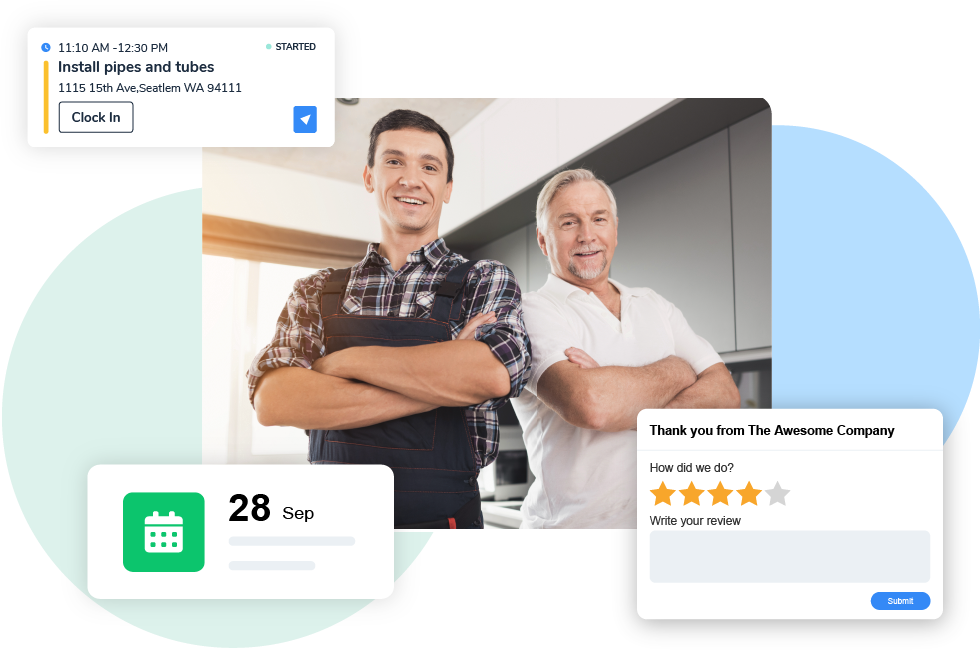
In essence, plumbing management software represents a paradigm shift for businesses in this field, moving beyond traditional methods to embrace efficiency, enhanced customer relationships, and data-driven decision-making. The journey through its capabilities, financial benefits, integration potential, and future trajectory reveals a powerful suite of tools that are not just beneficial but increasingly essential for modern plumbing enterprises. By understanding and implementing these solutions effectively, plumbing businesses can unlock new levels of operational excellence and sustained growth, ensuring they remain competitive and responsive in an ever-evolving market.
FAQ Summary
What is the typical cost of plumbing management software?
The cost varies significantly based on features, user count, and deployment model (cloud vs. on-premise). Many solutions offer tiered pricing, with basic plans starting around $30-$50 per user per month and more comprehensive enterprise solutions costing upwards of $100-$200 per user per month or more. Some may also have one-time setup fees.
Can plumbing management software help with inventory management?
Yes, many advanced plumbing management software solutions include inventory tracking features. This allows businesses to monitor stock levels, manage parts, track usage for specific jobs, and even automate reordering to prevent stockouts and reduce carrying costs.
Is plumbing management software suitable for small, independent plumbers?
Absolutely. Many software providers offer entry-level plans specifically designed for small businesses and solo contractors. These plans often provide essential features like scheduling, invoicing, and customer management at an affordable price point, helping even the smallest operations become more organized and professional.
How does plumbing management software handle different types of plumbing services (e.g., residential, commercial, emergency)?
Effective software can categorize service types, allowing for tailored scheduling, dispatching, and even pricing. It can flag emergency calls for immediate attention, track specific equipment or certifications needed for commercial jobs, and manage recurring maintenance schedules for residential clients, ensuring appropriate resources are allocated for each scenario.